Skip to content

Last updated: November 2026
SEO, AEO, GEO, AIO, LLMO. If the alphabet soup around search (and the whole AEO vs GEO debate) makes you want to close your laptop and go touch some grass, I get it.
Every week there’s a new acronym and someone new telling you that the old way of getting found online is dead and their new way is the only thing that’ll save your brand. Even Google’s own John Mueller has warned that the harder these new acronyms get pushed, the more likely it’s spam and scams. So let’s cut through it.
I think one of the biggest bullsh*t things is that AI, GEO and everything is killing SEO, but it’s my opinion that you need to have good SEO in order to rank on AI.
I literally learned SEO by getting my travel blog onto page one. I taught myself technical SEO, with schema, for a healthcare client by getting them onto Google for Jobs. And with an ecommerce brand selling safety sets, we went back to something really basic: what is her ideal client actually searching for? I found a phrase that was reasonably high volume and low competition, and I just changed it. Because she was on Shopify, it was f*cking insane how quickly she started ranking. She was on page one within about four weeks, and getting into the top three and outranking Amazon took a few months. Amazon! I always think it comes down to the basics.
In this guide I’ll break down what each term actually means, where they overlap (spoiler: a lot), and what an outdoor brand should actually spend time on to get found on Google and in AI tools like ChatGPT, without getting penalized. If you’d rather hand it over, here’s how I do SEO and AI search for outdoor brands.
What is AI search optimization called?
There isn’t one agreed name yet. The most common terms are AEO (answer engine optimization), GEO (generative engine optimization) and AIO (AI optimization). Some people also say LLMO (large language model optimization). They all describe the same goal: getting your brand cited or recommended when someone asks an AI tool a question.
What’s the difference between AEO and GEO?
AEO is about being the answer you see straight away, like the featured snippet at the top of Google, an AI Overview, or Siri reading out a reply. GEO is about being cited or mentioned inside conversational AI answers from tools like ChatGPT, Gemini and Perplexity. In practice there’s a lot of overlap, and plenty of people use the two terms interchangeably.
Here’s how I see it for outdoor brands:
If someone’s at the stage of the buying journey where they’re ready to buy, in Google they might be searching for “best rain jacket”.
But in ChatGPT, they might be asking, “What rain jacket would I need to survive a typical October day hiking in the Pacific Northwest?” (Trust me, I used to live in Vancouver. By October it’s probably been raining for 40 days straight.)
In ChatGPT, it’s more like they’re having a conversation with their friend; their robot friend. Google is still a bit more clinical with the search queries. People might search for “best”, “vs” or “reviews”, or they might just directly type in what they’re looking for. They might even type in a brand. If they’ve had a conversation with ChatGPT, they might hop back over to Google and type in that brand directly.
What is SEO?
SEO (search engine optimization) is everything you do to help your website show up in search engines like Google when someone searches for what you sell. It covers three big areas:
- Technical SEO: making sure Google can find, crawl and load your pages quickly
- On-page SEO: the content on the page, your headings, title tags and how well you answer what people are searching for
- Off-page SEO: what the rest of the internet says about you, like backlinks, reviews and mentions
The win you’re after is a ranked link that someone clicks through to your site.
One of my favorite things about SEO is that it always has been, and remains to this day, the platform that keeps on delivering long after you put the effort in. Social media wins can be quite short-lived, but SEO just keeps paying dividends and dividends and dividends, and the results compound over time. So when you get it right, you don’t just win that month, you win month after month after month.
Take one of my ecommerce clients, the brand selling safety sets that outranked Amazon. I stopped working with her a little bit after that, but she continued to make sales month on month on month. So her investment in me just kept multiplying even after we finished working together, even though she wasn’t touching the SEO much after that.
In my opinion, it’s also a great way to get your brand found and land clients without feeling like you have to post five trial reels a day on social media, once you get it to a point where it generates consistent leads and sales. Fundamentally, I’m a person who helps people make money from their business. So if SEO, AIO and all that good stuff can make you money, I’m happy.
What is answer engine optimization (AEO)?
Answer engine optimization is shaping your content so a search engine or assistant can lift it out and use it as the answer. Think of the box at the top of Google, the AI Overview, or Siri reading out a reply.
The win here is being the answer, even if the person never clicks. That might sound pointless, but if someone asks “what’s the best rain jacket for hiking in the Pacific Northwest” and your brand is the one named, that’s brand awareness money can’t easily buy.
AEO content tends to:
- Answer the question clearly in the first sentence or two under a heading
- Use the actual question people are typing as the heading
- Keep answers short and specific, then go deeper underneath
What is generative engine optimization (GEO)?
Generative engine optimization is about getting your brand mentioned, cited or recommended inside AI-generated answers from tools like ChatGPT, Gemini, Claude and Perplexity.
These tools build their answers by pulling from what they’ve learned and, often, from live searches across the web. So GEO leans heavily on how often and how consistently your brand is talked about online, and whether your content says something useful that the AI can’t just make up itself.
The win is being the brand an AI recommends when someone asks for a suggestion.
(And no, GEO has nothing to do with geography or local SEO, even though it sounds like it should.)
What is AIO?
AIO usually stands for AI optimization, which is a catch-all for any work to make your brand more visible in AI tools. It’s used loosely and often means the same as GEO.
To make things more confusing, some people use AIO as shorthand for Google’s AI Overviews. So if someone tells you they “do AIO”, it’s worth asking what they actually mean.
SEO vs AEO vs GEO vs AIO at a glance
| SEO | AEO | GEO | AIO | |
|---|---|---|---|---|
| Stands for | Search engine optimization | Answer engine optimization | Generative engine optimization | AI optimization (or AI Overviews) |
| Where you show up | Google’s ranked results | Featured snippets, AI Overviews, voice assistants | ChatGPT, Gemini, Perplexity and other AI chats | Catch-all for AI visibility |
| What a win looks like | A click to your site | Being the answer | Being cited or recommended | Any of the above |
| How you measure it | Rankings, clicks, Search Console | Snippet and AI Overview appearances | How often AI tools mention you | Depends who’s using the term |
Is SEO dead now with AI?
No. If anything, it matters more.
In May 2026 Google published its first official guide to optimizing your website for generative AI features on Google Search, like AI Overviews and AI Mode. So you don’t just have to take my humble opinion that you need good SEO to rank on AI search. You’ve got it straight from the horse’s mouth. Google says its generative AI features are rooted in its core Search ranking and quality systems, and that optimizing for generative AI search is optimizing for the search experience, “and thus still SEO.”
So AEO and GEO sit on top of SEO. They’re layers, not replacements. If your site is riddled with errors, you’ve not done your meta descriptions and you’ve not followed the simple best practices for SEO, then you’re probably not going to rank on AI search engines either.
I’m seeing a lot of spammers and scammers right now basically teaching you ways to trick AI into ranking you in just a few hours. It really reminds me of when I was doing affiliate marketing around 2015 and 2016. A little before that, people would make websites to rank for affiliate products, and they’d use invisible text to rank on Google. It was a hack and a tip and a trick. And anyone who ever followed those black hat SEO practices was ultimately phased out or hit by the next algorithm change.
This is why I’ll never do these hacks to shortcut my way to being ranked on AI, because it will come and bite you in the ass in the end. I’d rather play the long game and not lose my rankings after an algorithm update.
What actually gets an outdoor brand seen in Google and AI search
Here’s where I’d put your time.
How I approach SEO: my ASCEND framework
When I work on SEO for a brand, I use my ASCEND framework:
- Assess and analyze: this is where we look at where you’re at, then map that to where you want to be. We can’t find our way up the mountain without a route map showing us how to get there.
- Strategic keyword research: I’m looking for reasonable volume but as low competition as possible. On your main pages you might be really fighting if you’re in a saturated niche and the competition is high, but if I think a phrase is the best way to describe your outdoor brand, product or service, I’m going to use it. For a blogging strategy, I target more long-tail key phrases that have less search volume but that you’re likelier to rank for, because the bigger companies aren’t really going for them. Do a few of them and the results compound.
- Clear the path: fixing all the technical SEO and site errors.
- Engage: doing what we’re doing right now, creating content marketing that engages your audience and speaks to them.
- Near me: for brick-and-mortar businesses, really optimizing for people searching things like “retreats near me”, “camper van conversions near me” or “snowboard tuning near me”.
- Diversify: getting your backlinks and building a bigger brand, which I think falls into the AI side a lot. It’s all about building a bigger, reputable brand, not just a little social media business or something that goes viral on TikTok. We’re building a reputable company that AI is willing to cite.
Get the technical basics right
It’s pretty basic stuff, but here’s what I’d fix first:
- Make sure Google can crawl your site. That means a clear site structure. If you’re designing your own website, make sure you only have one H1. An H1 isn’t the styling of a website, it’s an HTML tag that gives structure for robots and whatnot.
- Submit your sitemap to Google Search Console.
- Pick one primary keyword for each page, so you don’t cannibalize your other pages. Say you sell ski gear. Your homepage might target “ski gear”, a category page might go after “ski pants”, and an individual product page might target “Gore-Tex ski pants”.
- Use Google Search Console so you can see what people are searching. Search Console now has a Generative AI performance report too, so you can see how often your pages show up in AI Overviews and AI Mode, which is really nice.
- Fix any broken links. Not only is that bad for SEO, it’s just sh*tty customer experience. If someone clicks on a link and they can’t access the product, offer or service, they’re going to f*cking click away, because our brains can’t deal with that kind of friction these days. They’ve gone to mush.
Write the stuff only you could write
This is the big one. Google’s guidance says first-hand experience, specific decisions and information a model couldn’t generate on its own are what tend to get cited. Generic listicles are the weakest.
For an outdoor brand, that means things like:
- Real gear testing, with photos and video from actual trips
- Why you made the design decisions you did (the fabric, the fit, the factory)
- Honest comparisons, including when your product isn’t the right one
- Trail notes, conditions and know-how from people who’ve actually been there
AI can write about the 10 best windbreakers for fall hikes, but it can’t tell you about the time you were coming down the Devil’s Backbone on Mount Baldy in Southern California in a complete f*cking whiteout, convinced you were going to get blown off the mountain, and how your jacket held up in those specific conditions when you could barely see your hand in front of your face.
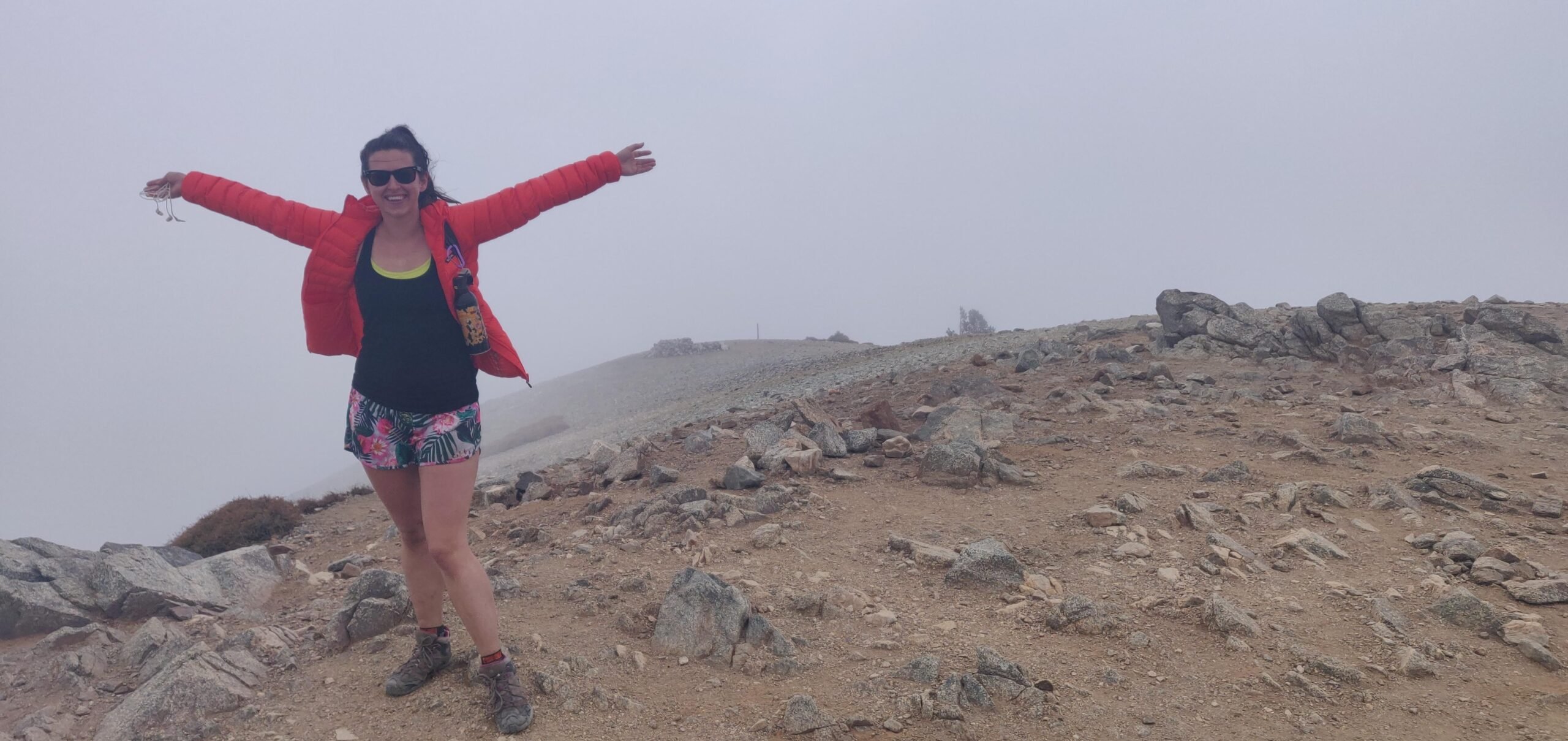
Even with these blogs, I’m a time-strapped founder, and I’ll confess I’m getting AI to help me write them. But I’m asking my AI to prompt me for my own insight as the founder of a marketing agency for outdoor brands, because there are things I know personally from lived experience that AI can’t pull. So even though it’s helping me get the content out quicker, I’m always dictating my own personal lived experience into these blogs, so you’re getting something valuable on the internet that isn’t just regurgitated AI slop. And I’d like to see you, as an outdoor founder, doing the same with your AIO.
Answer the question first
Use the questions your customers are actually asking as headings, and answer them straight away in a sentence or two before you go into detail. Tools like Google’s People Also Ask, Answer the Public and Ubersuggest are great for finding them. This helps you win featured snippets and makes your content easy for AI to quote.
It could even be down to values. People search for things like “sustainable outdoor clothing brands” and “ethical outdoor gear”, so if that’s what your brand stands for, answer those questions on your site.
Use your Google Business Profile and Merchant Center
Google names Google Business Profile and Merchant Center as part of how you show up in its AI features. If you have a physical location (a shop, a tour base, a glamping site), keep your Business Profile complete and up to date. If you sell products, keep your Merchant Center feed accurate.
Get talked about (for real)
I think the key thing with AI search is becoming a reputable, trustworthy brand, with brand citations across the web. Whether that’s through PR, making sure you have social media channels, having reviews out there about you, or being a guest speaker on podcasts and at events, really start thinking about building your brand as a whole, so that ChatGPT and other AI models can build this profile for you. The key word is genuine, which brings me to…
What to skip so you don’t get penalized
Google has made it clear that all its existing spam policies apply to AI Overviews and AI Mode too. Here’s what to avoid.
- Pumping out AI content at volume. Google’s spam policies say using generative AI to create many pages without adding value for users may violate its scaled content abuse policy, and Google now says it’s critical to manually fact-check and review AI content before publishing. My recommendation? Stick to what you might be used to doing as a founder who used to sit and physically write their blogs. Post one piece of good content per week with your genuine insight and you will rank well over time. I’ve been seeing posts from Gary Vee about how he posts 900 times a day and is aiming for 100,000. Obviously that’s cross-posting and redistribution on multiple platforms, and I imagine he’s using AI to help him with that. Is there really any need? I don’t think there is, and I just think it’s a bit of a monstrosity to be pumping out that much content.
- A new page for every variation of a question. Building separate pages for every slightly different phrasing, mainly to manipulate rankings, falls under scaled content abuse. One brilliant page beats twenty thin ones.
- Fake mentions. It’s funny how these trends come back around. In the world of AI, it’s fake mentions. Back in the earlier days of black hat SEO, when backlinks were a big thing, it was private blog networks: you’d buy the domain of a site, link it back to your own website, and people would build these massive networks. Some people would call that gray hat, some would call it black hat, but ultimately it was hacking your way to rank higher in the search engines. Fake mentions feel like the 2027 version of that.
- Rewriting everything “for AI”. Google’s systems understand synonyms and intent, so you don’t need a robotic, keyword-stuffed version of your page for AI.
- Paying for AI-only tricks. For Google, you don’t need special machine-readable files like llms.txt, and there’s no AI-specific schema markup you need to add. Schema still helps you get rich results in normal search, so it’s worth having for that.
So which one does your outdoor brand need?
All of them, but you don’t need four strategies. Start with solid SEO, write content that only your brand could write, answer your customers’ questions clearly, and get people genuinely talking about you. Do that and you’re doing AEO and GEO too, whatever we end up calling it next year.
And if you’d rather spend your time outside than in Search Console, that’s what I’m here for. See how I help outdoor brands get found on Google and in AI search.
Not ready to hand it over yet? Sign up to Marketing Mondays. One marketing idea for outdoor brands, every Monday. Steal it, use it, sell more cool sh*t.
FAQs
Is AEO the same as SEO?
No, but they’re closely linked. SEO is about ranking your pages in search results. AEO is about being picked as the direct answer. Most of the work overlaps, and AEO relies on good SEO underneath it.
Can I do AEO and GEO myself?
Yes. The fundamentals are the same as good SEO: a technically sound site, genuinely useful content and a brand people talk about. Where it gets time-consuming is the research, the consistency and tracking what’s working. And a lot of outdoor founders are stretched a little thin. Some of them would rather be outside (I think we’d all rather be outside touching grass sometimes), but others are really in the thick of it. They might have loads of markets to go to, a new product launch to design, customers to speak with and a million and one things on their plate. Sometimes they just don’t have the time, and sometimes they don’t have the skill set for it.
Do I need llms.txt to show up in AI search?
Not for Google. Google says you don’t need new machine-readable files to appear in its AI features. Other AI tools haven’t all said the same, but it isn’t where most brands should start.
How do I know if ChatGPT is mentioning my brand?
Ask it the questions your customers would ask and see who comes up. For Google, Search Console’s Generative AI performance report shows how often your pages appear in AI Overviews and AI Mode. If you’re a service-based business, you can always add a “Where did you find me?” question to your inquiry form or any feedback forms. For product-based businesses, you can track and attribute traffic that has come from AI through Google Analytics, by setting up a custom channel group that pulls visits from sites like chatgpt.com and perplexity.ai out of your general referral traffic. Or you can use an AI visibility tracking tool.